

Dear Colleagues and KNÓSIS Community,
Generalized joint hypermobility is estimated to affect approximately 10–20% of the population, although prevalence varies by age, sex, ancestry, and diagnostic criteria. While flexibility itself is not a disorder, symptomatic hypermobility can contribute to persistent pain, joint instability, fatigue, and a range of systemic symptoms that are often overlooked.
Recognizing these complex presentations and understanding how best to treat them is becoming increasingly important in clinical practice.
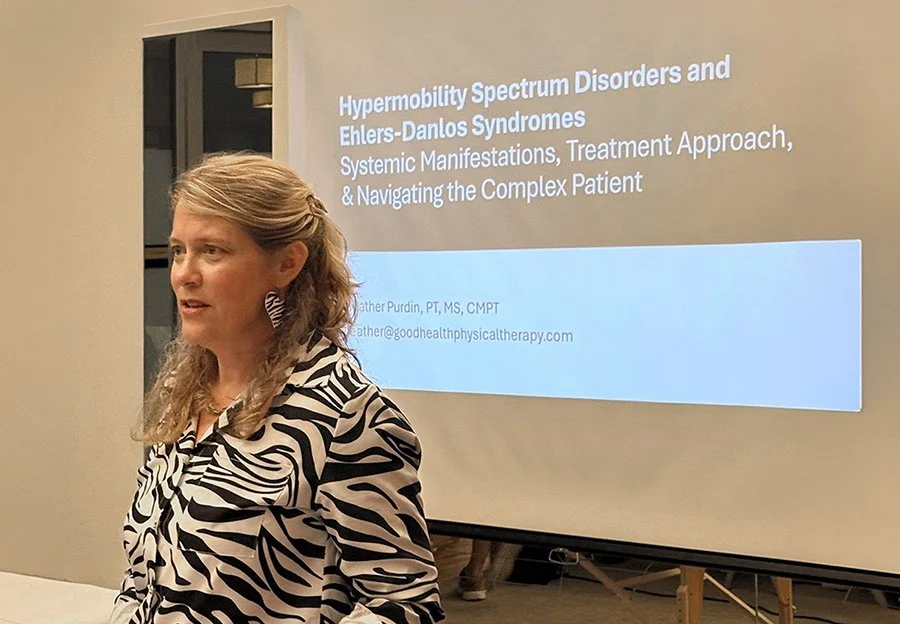
At KNÓSIS, we recently had the privilege of hosting Heather Purdin, PT, MS, PT, CMPT, a clinician specializing in Hypermobility Spectrum Disorders (HSD) and Ehlers-Danlos syndromes (EDS), for a sold-out, three-day educational course attended by 36 physical therapists from New York and other states.
Together, we explored emerging research, the multisystem nature of these conditions, and evolving approaches to assessment and rehabilitation.
A Major Change in Hypermobility Diagnosis Is Coming
For the first time since 2017, the diagnostic criteria for all types of Ehlers-Danlos syndromes (EDS) and Hypermobility Spectrum Disorders (HSD) is updated.
Led by the Ehlers-Danlos Society's Road to 2026 initiative, this international effort aims to incorporate advances in connective tissue research, clinical phenotyping, and our understanding of the relationship between hypermobile EDS (hEDS) and HSD.
The new framework will be published on December 1, 2026, in the internationally renowned journal, the American Journal of Medical Genetics, a leading global publication for genetic and rare disease research.
In March 2027, a second publication will provide best-practice care and management pathways, helping healthcare providers understand how to best support and treat people living with EDS and HSD after diagnosis and beyond.
These developments represent an important step toward greater diagnostic clarity and more individualized patient care.
At KNÓSIS, we are preparing for these changes now, deepening our understanding of the complex clinical presentations associated with hypermobility and translating emerging knowledge into our assessment and rehabilitation approaches.
Looking Beyond the Musculoskeletal System
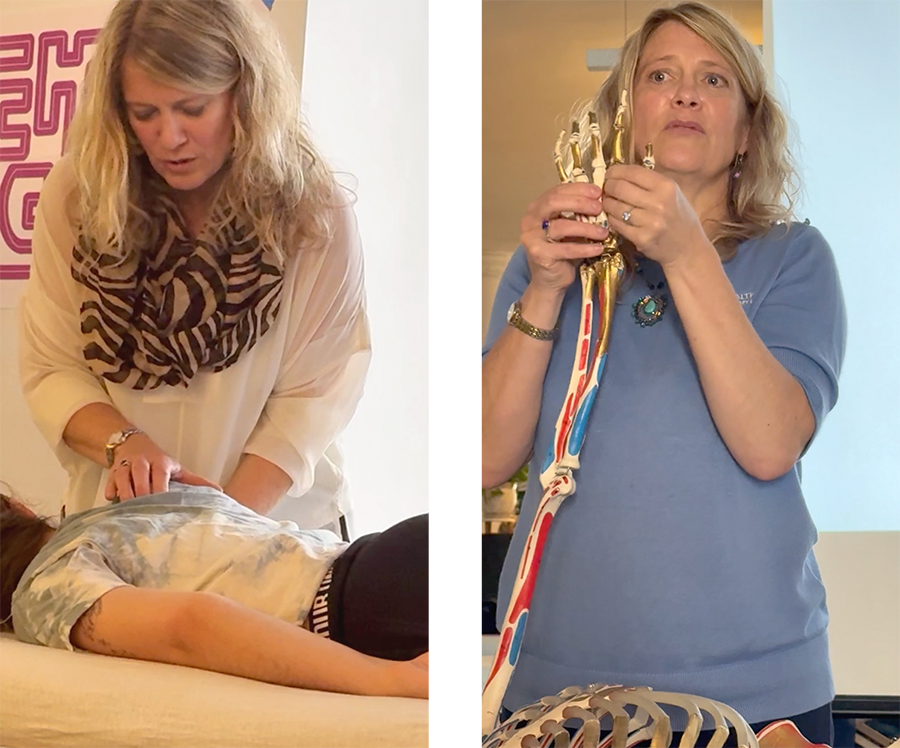
One of the central themes of our training was the importance of recognizing the multisystem features that may accompany symptomatic hypermobility.
Dysautonomia: Orthostatic intolerance, postural tachycardia, dizziness, fatigue, and altered exercise tolerance may significantly influence a patient's ability to participate in rehabilitation.
Gastrointestinal symptoms: Functional gastrointestinal complaints and disorders of gut–brain interaction are frequently reported in individuals with hEDS/HSD and may contribute to nutritional challenges, fatigue, and reduced quality of life.
Mast-cell-related symptoms: Some patients report flushing, urticaria, gastrointestinal symptoms, or other features that raise concern for mast-cell mediator disorders. These presentations require careful medical evaluation, as symptoms alone do not establish a diagnosis of mast cell activation syndrome (MCAS).
Pain and nervous system regulation: Persistent pain may reflect several interacting contributors, including joint instability, altered movement strategies, tissue sensitivity, sleep disturbance, and psychosocial factors.
Recognizing these relationships helps guide appropriate screening, referral, and interdisciplinary management.

When Tightness Is a Strategy for Stability
One of the most clinically relevant discussions concerned the relationship between joint instability and compensatory muscular guarding.
Patients with hypermobility may demonstrate excessive movement at certain joints while simultaneously experiencing substantial muscular tension and restriction in adjacent regions.
The apparent tightness may, in part, represent an adaptive strategy to create stability. This has important implications for rehabilitation.
Stabilize first. Then restore movement where appropriate.
Rather than automatically stretching or releasing a painful, restricted region, we must determine whether that restriction is contributing to stability, and whether the patient has sufficient neuromuscular control to tolerate additional mobility.
Rethinking Posture and Shoulder Rehabilitation.
The course also challenged some familiar rehabilitation cues. For example, repeatedly instructing patients to pull their shoulders down and back may interfere with normal scapular upward rotation during arm elevation.
For patients with shoulder instability, treatment may require restoring scapulohumeral coordination, improving humeral-head control, and progressively strengthening the muscles that support the joint rather than relying on passive stretching or aggressive mobilization.
The same principle applies to cervical rehabilitation, where improving head and neck support requires attention to deep cervical motor control, thoracic alignment, and the patient's overall movement strategy.
Proprioception, Motor Control & Progressive Loading
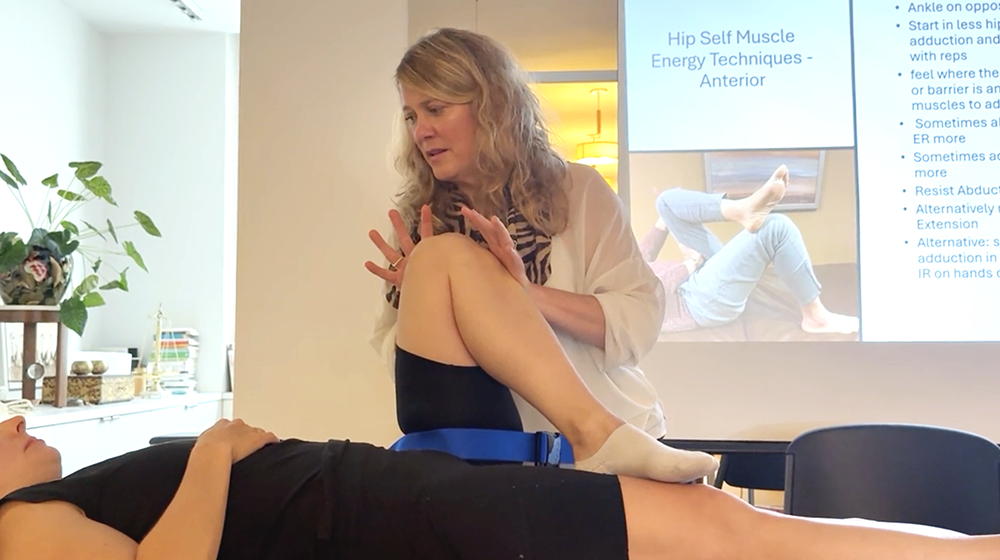
A recurring clinical message was the importance of helping patients develop a more reliable sense of where their joints are in space.
For individuals with symptomatic hypermobility, rehabilitation frequently requires more than conventional strengthening.
It may involve:
Improving joint-position awareness and movement discrimination
Establishing controlled, supported positions before increasing range or resistance
Training coordinated and efficient recruitment rather than excessive muscular bracing
Building confidence through repeated, successful movement experiences
The guiding principle is simple:
Start low. Go slow. Progress with purpose.
For patients with complex pain, fatigue, or autonomic symptoms, appropriate pacing and individualized progression are especially important.

The Value of Clinical Collaboration
Bringing together 36 physical therapists for three days of intensive learning created an opportunity for meaningful discussion, exchange of clinical experience, and deeper exploration of how we approach these complex patients.
At KNÓSIS, we believe that exceptional care grows through continued education, thoughtful clinical reasoning, and collaboration across disciplines.
Our approach integrates detailed movement assessment, skilled manual therapy, neuromuscular re-education, and progressive exercise to address not only symptoms but also the movement strategies and underlying impairments contributing to them.
Our goal is not simply to increase strength or flexibility. It is to help patients develop the stability, coordination, and confidence needed to move more freely and participate fully in their lives.
We are grateful to Heather for sharing her extensive clinical experience and to the physical therapists who traveled from near and far to participate in this exceptional learning experience.
To our referring physicians and healthcare colleagues, we value the opportunity to collaborate in the assessment and management of patients with HSD, EDS, and related complex musculoskeletal presentations.
With warm regards,
Tracey Vincel, PT, M.Phty, CBBA
Founder & Clinical Director
KNÓSIS Physiotherapy & Wellness
Our purpose:
To know ourselves through the experience of the body.
RECOMMENDED READING
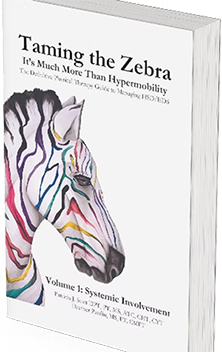
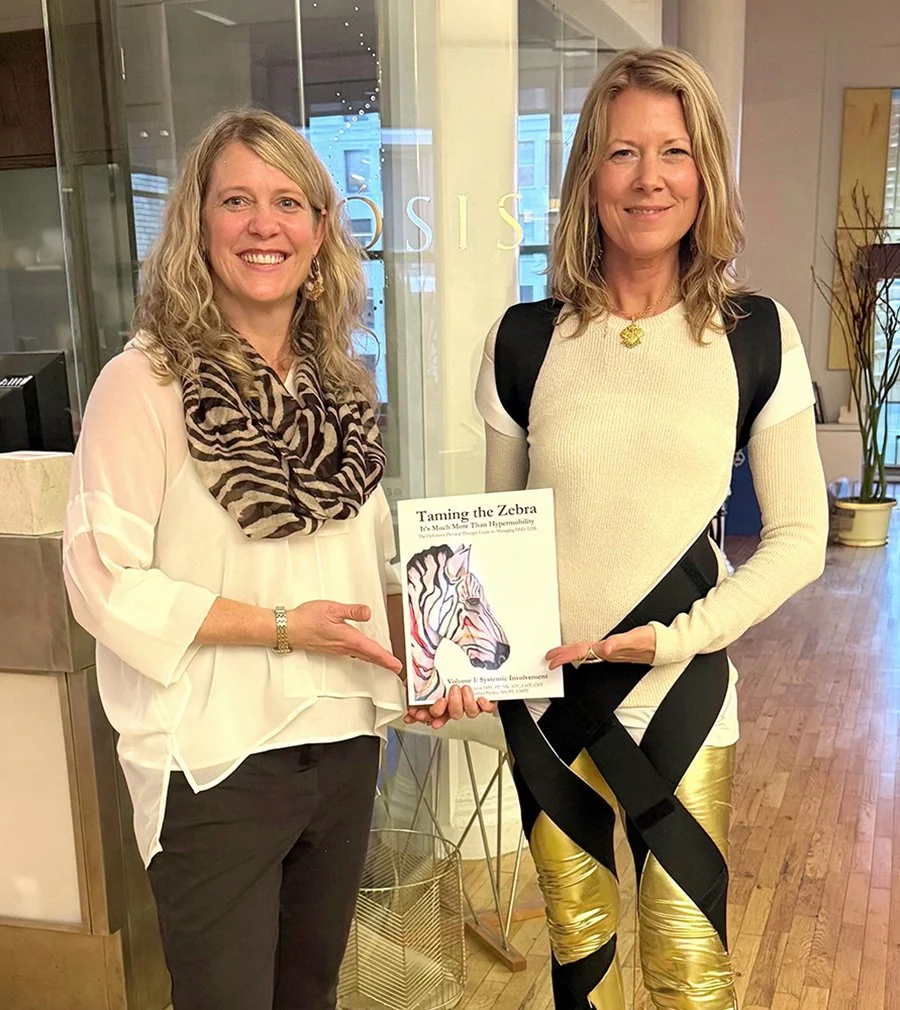
Taming the Zebra
It’s Much More than Hypermobility The Definitive Physical Therapy Guide to Managing HSD/EDS Volume 1: Systemic Involvement
by Heather Purdin & Patricia J. Stott
Taming the Zebra is the ultimate guide to prepare for your upcoming in-person Physical Therapy continuing education (CEU) class. With its comprehensive coverage of HSD/EDS and practical and evidence-based treatment approaches, it's the best resource to help you get the most from the course.
Medical providers commonly dismiss hypermobility spectrum disorders (HSD) and Ehlers-Danlos syndromes (EDS) as being benign. Those struggling with the complex and interacting systemic symptoms caused by their altered connective tissue can have worse health outcomes due to this limited view. Patients with HSD/EDS often fail in physical therapy, the treatment of choice for these conditions. This book explains the intricate interrelationships of the various systems of the body affected by connective tissue differences. It explores the impact of altered connective tissue from the cellular level to a whole person perspective and explains the problems leading to failed therapy attempts. This text is written for allied health professionals and astute patients, with summary boxes to call out key concepts and narrative patient stories to solidify learning. The reader will glean concrete ideas about how to modify healthcare and self care to improve outcomes and reverse the downward spiral of compounding health issues too often associated with HSD/EDS.

HEATHER PURDIN, MS, PT, CMPT,
Co-author of Taming the Zebra: The Definitive Physical Therapy Guide to Managing HSD/EDS
Heather Purdin is a Physical Therapist and the owner of Good Health Physical Therapy & Wellness in Portland, Oregon. She brings nearly three decades of clinical experience specializing in orthopedic and manual therapy, with particular expertise in hypermobility spectrum disorders (HSD) and Ehlers-Danlos syndromes (EDS).
Heather holds advanced certification in Manual Physical Therapy from the North American Institute of Orthopedic and Manual Therapy (NAIOMT) and earned both her Master of Science in Physical Therapy and Bachelor of Science in Psychology from Duke University, graduating magna cum laude.
Her manual therapy background includes joint mobilization (Paris and NAIOMT approaches), myofascial release, craniosacral therapy, visceral mobilization, and a range of soft-tissue and neuromuscular techniques. She has worked across outpatient orthopedic, acute care, and neurological rehabilitation settings.
Heather has been an active leader in her field, serving in multiple roles with the Oregon Physical Therapy Association, including Secretary, Public Relations Committee member, and Continuing Education Committee member. Since 2013, she has chaired the Oregon Area Ehlers-Danlos Society and Support Group, providing education and advocacy for individuals living with HSD and EDS.
Recognized for her excellence in clinical practice, Heather has been named one of Portland Monthly Magazine’s Top Doctors (2015, 2018, 2023) and received the Opencare Patients’ Choice Award in 2015. She is also the author of Taming the Zebra – It’s Much More Than Hypermobility: The Definitive Physical Therapy Guide to Managing HSD/EDS, a leading resource for both professionals and patients seeking to understand and manage hypermobility.
