Why “Unlock Your Knees!” Isn’t Enough: The Mechanics of Hyperextension and Building True Support
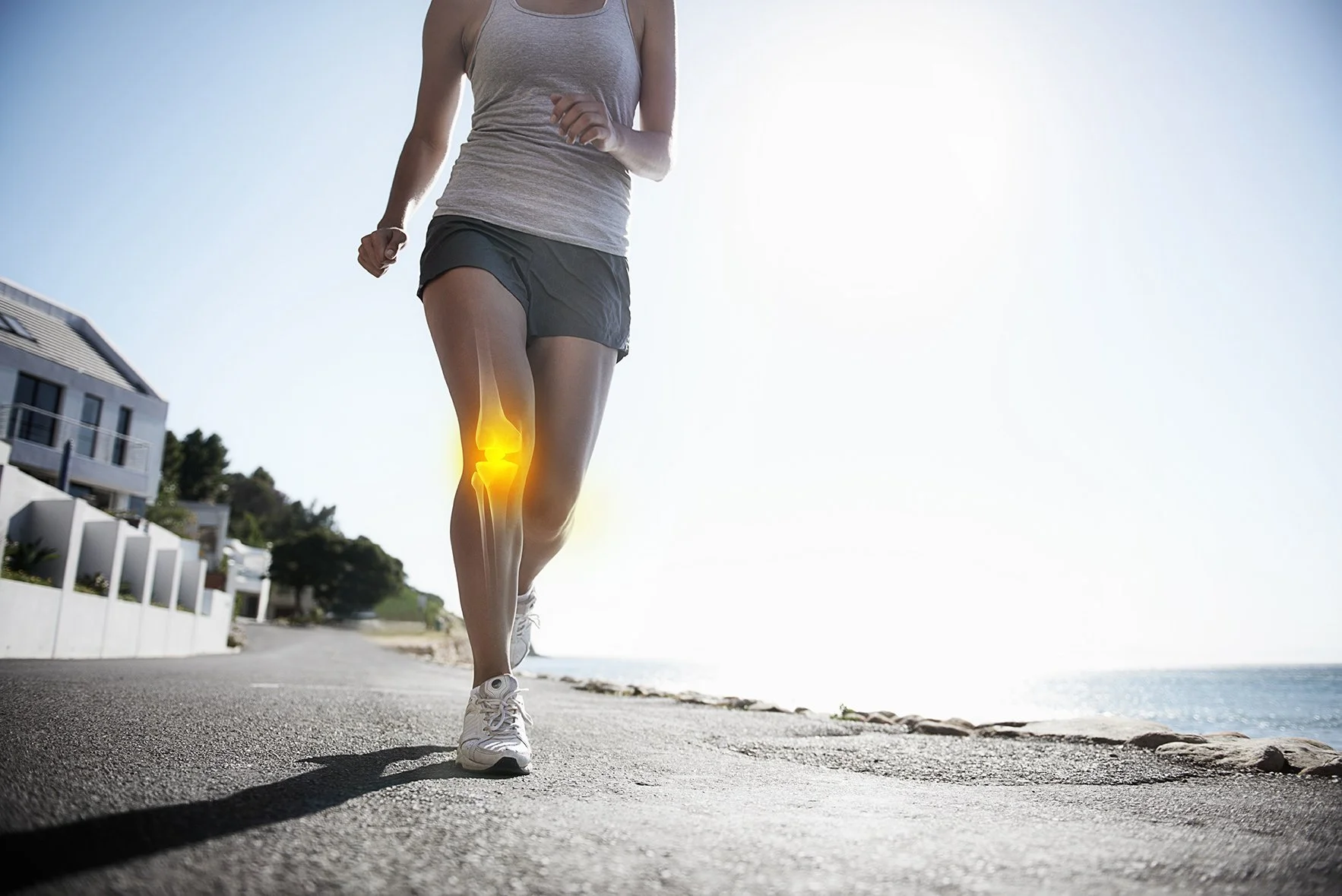
Have you ever been told to “unlock your knees” by your trainer at the top of your squat to stand, in Tree Pose in yoga, or by your Pilates teacher during the footwork series?
For years, I was told to “unlock” or micro-bend my knees. But every time I tried, my knees felt overly bent, almost exaggerated — and it seemed unreasonable to have to consciously manage it every time I stand.
As a Pilates instructor, I’ve learned to use a variety of techniques, tools, and cues to help people gain control over knee hyperextension.
In this blog, I want to explore what’s actually happening when the knee moves into hyperextension — and how we can address it. When someone says, “unlock your knees,” what are they really asking for? What, specifically, needs to change in the body — and how do we make that change happen?
What Is a Hyperextended Knee?
When you hyperextend your knees, you’re not just standing straight — you’re pushing your knees slightly past straight.
It might not look dramatic. In fact, it can look tall and “good.” But when your knees lock back like that, you stop using your muscles to hold yourself up. Instead, you hang on your joints.
Think of your knee like a door hinge. When it’s straight, the door is closed. When you push it past closed, the hinge is no longer secure — it’s resting at its end range.
Knee hyperextension, or genu recurvatum, is extremely common — often in dancers, yogis, athletes, but also in people who work at desks in every walk of life. For some, this is structural. For others, it is a habit that develops over time, often in response to instability, weakness, or a lack of proprioceptive awareness.
When you hyperextend consistently:
Your hamstrings relax
Your glutes don’t fully engage
Your calves don’t control your weight
Your core drifts
Your ligaments take the load instead of your muscles
It may feel stable because the joint is “locked,” but it’s passive stability.
This can lead to strain in the back of the knee, tight hips, lower back discomfort, poor balance, and wear and tear on the joint.
It also changes how the rest of your body stacks. When the knees push back, the pelvis often shifts forward. Then the ribs shift back. Then the head moves forward. One small joint choice affects everything above it.
Standing should feel supported from the ground up — like your muscles are gently holding you. When you hyperextend, you’re leaning instead of holding.
Addressing this pattern requires restoring proprioception and awareness, recruiting the right stabilizers, and rebuilding dynamic alignment. More importantly, it means retraining the relationship between the feet, legs, pelvis, and spine so support comes from coordinated muscular activity rather than passive joint locking.
Real Change Begins With Awareness
Before you try to strengthen or fix anything, you need to know where you are. If you can’t feel how you’re standing or moving, it’s very hard to change it.
Begin by noticing your alignment.
Is your head stacked over your ribs?
Are your ribs balanced over your pelvis?
Is your pelvis centered over your feet?
What do the natural curves of your spine feel like?
Where does neutral pelvis actually feel comfortable and supported for you?
Often, certain muscles are working too hard or are restricted. Calves, quadriceps, and the muscles along the spine frequently grip to create a sense of stability. When we gently reduce that overactivity, the body has space to reorganize in a more efficient way.
Sometimes improvement comes not from doing more, but from doing less.
We can also have joint restrictions that need to be addressed by a therapist before you can actually feel stacked properly.
From there, we rebuild with control.
Start in supported positions — lying supine or prone — where you can feel what’s happening without fighting gravity. Move slowly. Let the breath guide you. Begin to wake up the deeper stabilizing muscles that support your joints without locking them.
As you learn to feel and control these muscles, strength develops in a way that feels integrated, not forced.
The Muscular Support
First, we work on the posterior chain — your glutes, deep hip rotators, and hamstrings. These muscles help control your hips and keep your thighs from drifting forward. When they’re doing their job, your knees don’t have to snap back for stability.
Next, we teach your lower leg muscles — especially your calves — how to control your shin bone (the tibia). When you stand or walk, your shin should gently move forward over your ankle. If it doesn’t, your knee often pushes backward instead. Strong, responsive calf muscles help guide that movement so your knee stays supported.
We also focus on pelvic control and core connection. If your pelvis drifts forward or your ribs shift back, your knees will compensate. Your deep abdominal muscles help keep your torso stacked over your hips so your legs can line up properly underneath you.
Finally, we improve ankle mobility and foot strength. If your ankles are stiff or your feet collapse, the knee has to adjust. Strong, balanced feet and flexible ankles create a stable base so your knees don’t need to lock for balance.
The Program
Stand normally.
Now gently push your knees back as far as they go.
That’s hanging in the joints and overstretching the posterior structures of the knee. Notice what the rest of your body does up the chain. Is your center of gravity over your base of support?
Rock your body slightly forward and back from the ankles, allowing the tibia to drift forward and then back until your weight feels more centered over your heels.
It should feel long, stable, slightly more muscular — not like a squat. The ankle is soft. You’re not bending the knees, but restacking your bones away from the joint’s end stop.
Wake Up the Back of Your Legs
Hyperextension often happens because the back of the legs aren’t joining the party.
Stand and gently press your heels into the floor as if you’re trying to drag them backward (without actually moving).
You should feel:
Hamstrings turn on
Glutes lightly engage
Knees feel supported
This helps you stand on muscle instead of ligament.
Keep Your Weight Balanced on Your Feet
Many people who hyperextend shift forward.
Practice feeling:
Heel
Base of big toe
Base of little toe
If your weight lives mostly in your forefoot, your knees will drift back.
Balanced, active feet equal supported knees.
Slow Down How You Straighten Your Legs
When you stand up from a squat or press your legs straight:
Think: lengthen.
Straighten slowly.
Stop just before the knee pushes backward.
Stay tall through your hips. Lift the quad.
It’s about control at the top — extending from the hips before the knee reaches end range.
Don’t Over-Correct
A common mistake is walking around in a constant knee bend. That creates tension and fatigue.
The goal is straight and supported — above, below, and 360 degrees around the joint.
Reformer Applications
Reformer footwork is a foundational Pilates exercise performed lying on your back with your feet on the footbar, pressing the carriage in and out against spring resistance.
While it looks simple, it trains how force travels from the foot through the ankle, tibia, femur, pelvis, and spine.
The goal is not just to straighten the legs, but to maintain a neutral pelvis, balanced foot pressure, and organized knee tracking as the legs move.
Footwork is an ideal place to address knee hyperextension because you’re essentially moving through a supported squat-to-stand in a closed-chain, gravity-assisted environment.
The springs give you feedback. The carriage gives you time.
Instead of straightening the knee into end range, the focus shifts to connection. The deep stabilizers of the hip — particularly the external rotators and adductors — work alongside the glute max and core to support extension from the top down and bottom up.
As you press out, feel the sitting bones gently narrow and the femur spiral in the socket. Notice the direction of the bones as the tibia glides and the knee approaches straight — not locked, but supported.
Imagine pressing the bar away to lengthen the leg rather than snap it straight. Allow a subtle lift through the lower abdominals and pelvic floor. Let the heel stay grounded. As you finish, gently lift the VMO to guide the kneecap upward without thrusting the joint backward.
The leg straightens because everything is participating — not because the knee finds the end of its range.
Final Thought: Awareness, Control, Strength
“Unlocking the knees” is not a cue meant to suggest holding a bend. It is about shifting from passive support to active organization.
When the body begins to share load more effectively, movement becomes more efficient, more responsive, and more sustainable over time.
At KNÓSIS Physiotherapy & Wellness, this is the level of detail we look for. Not just how a joint moves, but how the body supports that movement as a whole.
Our one-on-one Pilates sessions are designed to help you feel these changes, not just think about them.
If this is something you’ve been noticing in your own body — or if you’ve been given a cue without fully understanding it — this is exactly where the work begins.